
Tyres
Can you fit 33-inch tires on a 2024+ Toyota Tacoma?
Which fourth-generation Tacomas have factory 33s, what an aftermarket swap changes and the clearance and safety checks to make before fitting them.
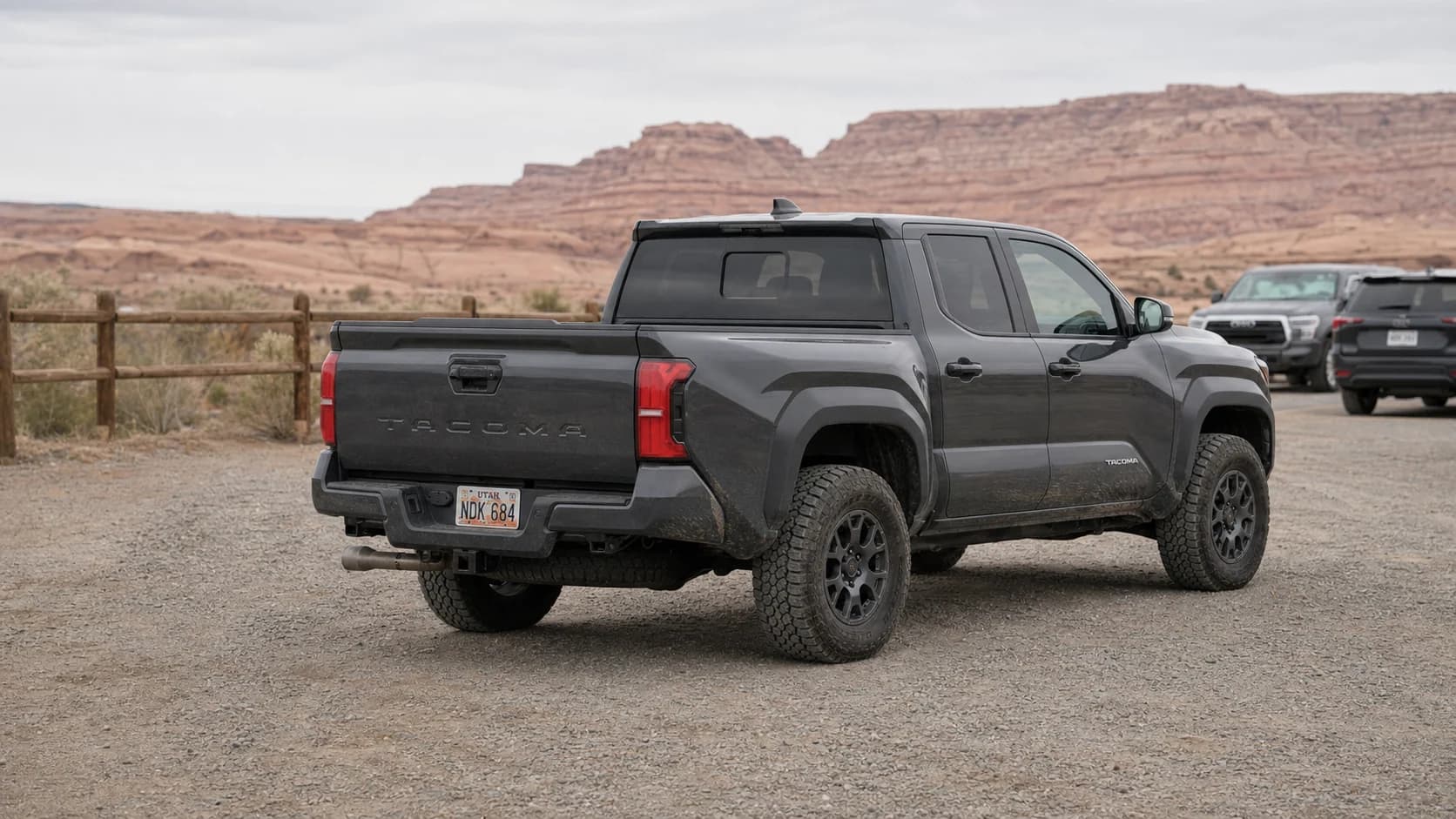
Yes, a fourth-generation Toyota Tacoma can run 33-inch tires. The important qualification is that some 2024 and newer Tacomas were engineered with 33s from the factory, while fitting the same nominal size to another grade can require a different wheel, clearance work and a conversation with Toyota about its driver-assistance systems.
The cleanest route is a factory 33-inch configuration. If your Tacoma did not leave the factory on 33s, treat the change as a complete wheel, tire, clearance and safety-system fitment rather than a tire-only swap.
What this guide covers
This guide covers the US-market fourth-generation Toyota Tacoma from 2024 through 2026. It includes SR, SR5, TRD PreRunner, TRD Sport, TRD Off-Road, Limited, TRD Pro and Trailhunter, but the factory specification changes with grade, powertrain, package, cab and bed.
It does not cover the 2016 to 2023 third-generation Tacoma. Advice for that truck should not be transferred to the new platform.
Toyota publishes several non-33-inch factory sizes for the 2024 Tacoma, including 245/70R17, 265/70R17 and 265/65R18. Read the Tire and Loading Information Label on the driver's door opening before assuming that another Tacoma's combination applies to yours.
The short answer
- TRD Pro: factory 33-inch Goodyear Territory tires on 18-inch wheels.
- Trailhunter: factory 33-inch Goodyear Territory tires on 18-inch wheels.
- TRD Off-Road with i-FORCE MAX: factory 33-inch Falken Wildpeak all-terrain tires on 18-inch wheels.
- Other grades and configurations: 33s may be physically achievable, but there is no responsible universal no-lift or no-rub answer.
The powertrain qualification matters. A TRD Off-Road badge alone does not guarantee the factory 33-inch setup. Toyota has also offered other TRD Off-Road configurations with smaller tires, including a 32-inch package for 2026.
What '33-inch' means
'33-inch tire' is a useful category name, not an exact measurement shared by every product. A 285/70R17, one of the most discussed fourth-generation Tacoma sizes, calculates to about 32.7 inches in nominal diameter. The tire maker's published overall diameter can still vary with the model, construction and approved measuring rim.
That difference matters near a body mount, liner or suspension component. Two tires carrying the same sidewall size can have different shoulder shapes and measured dimensions. Wheel width and offset then move that tire through a different path as you steer and compress the suspension.
Compare exact tire and wheel specifications, not the '33' label alone.
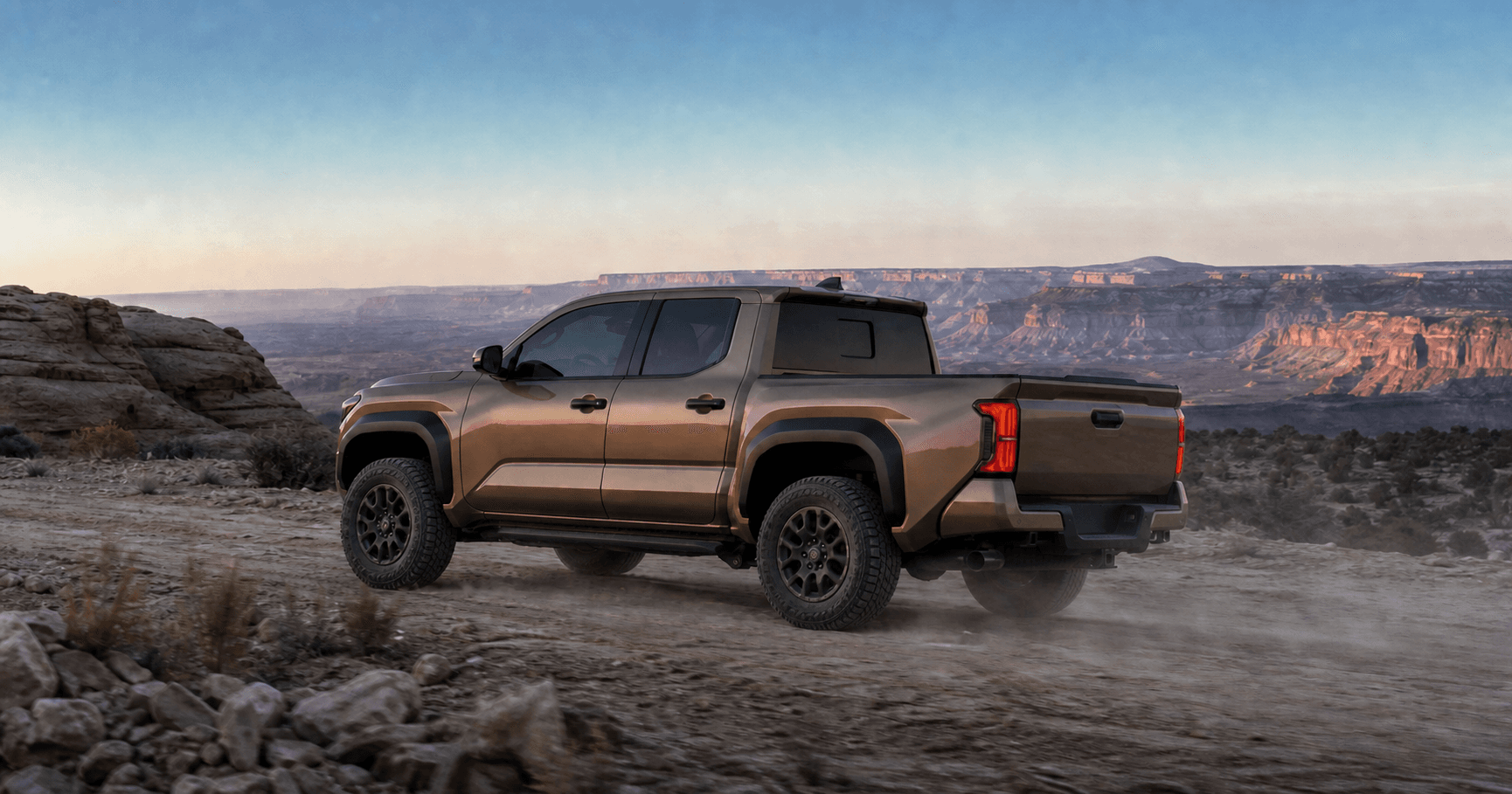
Visual concept of a restrained 33-inch Tacoma build. This image does not confirm mechanical fitment.
Which Tacomas are the simplest starting point?
TRD Pro, Trailhunter and the i-FORCE MAX TRD Off-Road are the least ambiguous answers because Toyota sells those configurations on 33s. They also show why factory fitment is more than tire diameter.
Toyota pairs the 33-inch tires with grade-specific 18-inch wheels, suspension hardware and other off-road equipment. TRD Pro and Trailhunter also sit higher and wider than an SR5. Those trucks are not evidence that an SR5, Limited or gas-powered TRD Off-Road will reproduce the same clearance by copying the sidewall number.
If you are choosing a new Tacoma and 33s are central to the plan, a factory configuration removes much of the guesswork. It also gives Toyota a defined baseline for the vehicle's electronic systems, spare and published performance.
Can 285/70R17 tires fit an SR5 without a lift?
One commercial Falken and DV8 Offroad test fitted LT285/70R17 tires on 17x9 zero-offset wheels to a 2024 SR5 without a lift. The test truck needed its front valance and a removable bracket taken off. The builders also made minor optional metal clearance changes so the tire could move through full suspension flex. The zero-offset wheels produced a noticeably wider stance.
A second Falken test used P285/70R17 tires on 17x9 zero-offset wheels with a 1.5-inch front level. That truck had its mud flap and a bracket removed. Its builders reported no sheet-metal trimming for their combination.
These tests prove that two specific builds were made to work. They do not prove that every 285/70R17 fits every 2024 and newer Tacoma without rubbing. The two trucks used different tire constructions and suspension setups, while both used an aggressive wheel offset and removed factory parts.
Ask a fitter to check the proposed combination at:
- Full steering lock in both directions.
- Full suspension compression and droop.
- Normal ride height and the intended loaded touring weight.
- The inner sidewall, upper control arm, liner, mud flap, body and chassis brackets.
- The spare-tire location and any trailer or recovery equipment.
A parking-lot lock-to-lock test is not a complete articulation check.
The Toyota Safety Sense issue matters more than rubbing
Toyota's 2024 Tacoma driving-support guidance draws a clear line around non-standard tire sizes. For a truck with standard suspension, Toyota says a tire size outside the manufacturer specification is not a configuration Toyota Safety Sense 3.0 was designed to accommodate. Its guidance strongly recommends against that configuration and discusses disabling the system through an authorized facility in that category.
That warning should stop the usual fitment conversation from ending at 'it does not rub'. A tire can clear the body and still sit outside the conditions Toyota used for its cameras, radar, stability controls and related driver-assistance functions.
Before buying, give a Toyota dealer or appropriately qualified facility the truck's VIN and the exact proposed tire size, wheel specification and suspension changes. Ask for a written answer covering Toyota Safety Sense, warning lights, calibration and warranty implications. Do not rely on a forum answer for this part of the decision.
What changes when you move away from the factory size?
Wheel width and offset
Offset changes where the tire sits relative to the body and suspension. Pushing a 33 outward can improve one clearance while worsening another, increase tire poke and change scrub radius and steering feel. Copying a wheel size without its offset is incomplete fitment advice.
Load, speed and pressure
The replacement must suit the truck's load and speed requirements, while the wheel must suit the tire maker's approved rim-width range. LT construction is not automatically better for an unladen daily driver. It can add weight and require a different pressure strategy.
Use the driver's door label and owner's manual as the starting point for size and cold pressure. Then get a pressure recommendation for the exact replacement tire and real axle loads.
Spare and roadside use
Confirm that a matching spare fits its storage location and clears surrounding components. A materially different rolling diameter is a poor emergency plan, particularly on a four-wheel-drive vehicle.
Speedometer, gearing and braking
A larger rolling diameter travels farther per revolution. It can change indicated road speed, effective gearing, acceleration and braking feel. Measure the real result rather than relying only on a nominal size calculator.
Alignment and full-travel clearance
Any suspension or wheel change can alter the clearance envelope and alignment. Check the finished truck at its working load, then recheck it after the suspension settles.
State rules and insurance
Vehicle modification, inspection and tire-coverage rules vary by state. Confirm the requirements where the truck is registered and disclose the completed changes to the insurer. There is no useful single national clearance rule that replaces those checks.
Our verdict
If you want the lowest-risk 33-inch Tacoma, choose a factory-equipped TRD Pro, Trailhunter or i-FORCE MAX TRD Off-Road in the model year and configuration you have verified.
If you already own another fourth-generation Tacoma, a 285/70R17 build can be achievable, but it is not a universal bolt-on promise. Select the tire, wheel width, offset, suspension and any clearance changes as one system. Get the complete combination checked through full travel and get a vehicle-specific answer from Toyota or an authorized facility about Toyota Safety Sense before spending the money.
You can compare the visual stance of a restrained 33-inch build in the Nordak Studio. Treat the result as a design preview, then take the exact wheel and tire specification to a qualified installer for mechanical approval.
Sources
- Toyota USA, 2024 Tacoma with i-FORCE MAX, published 23 April 2024
- Toyota USA, 2025 Toyota Tacoma, published 17 December 2024
- Toyota USA, 2026 Toyota Tacoma, published 13 November 2025
- Toyota, 2024 Tacoma tire information, accessed 21 July 2026
- Toyota, 2024 Tacoma driving-support systems excerpt, accessed 21 July 2026
- Falken Tires, no-lift 2024 Tacoma SR5 fitment test, accessed 21 July 2026
- Falken Tires, levelled 2024 Tacoma SR5 fitment test, accessed 21 July 2026
- NHTSA, tire safety ratings and awareness, accessed 21 July 2026