Tyres
Can you fit 33-inch tyres on a Next-Gen Ford Ranger?
A clear answer on 33-inch tyres for the 2022+ Next-Gen Ford Ranger, including wheel, clearance, lift and Australian legal checks.
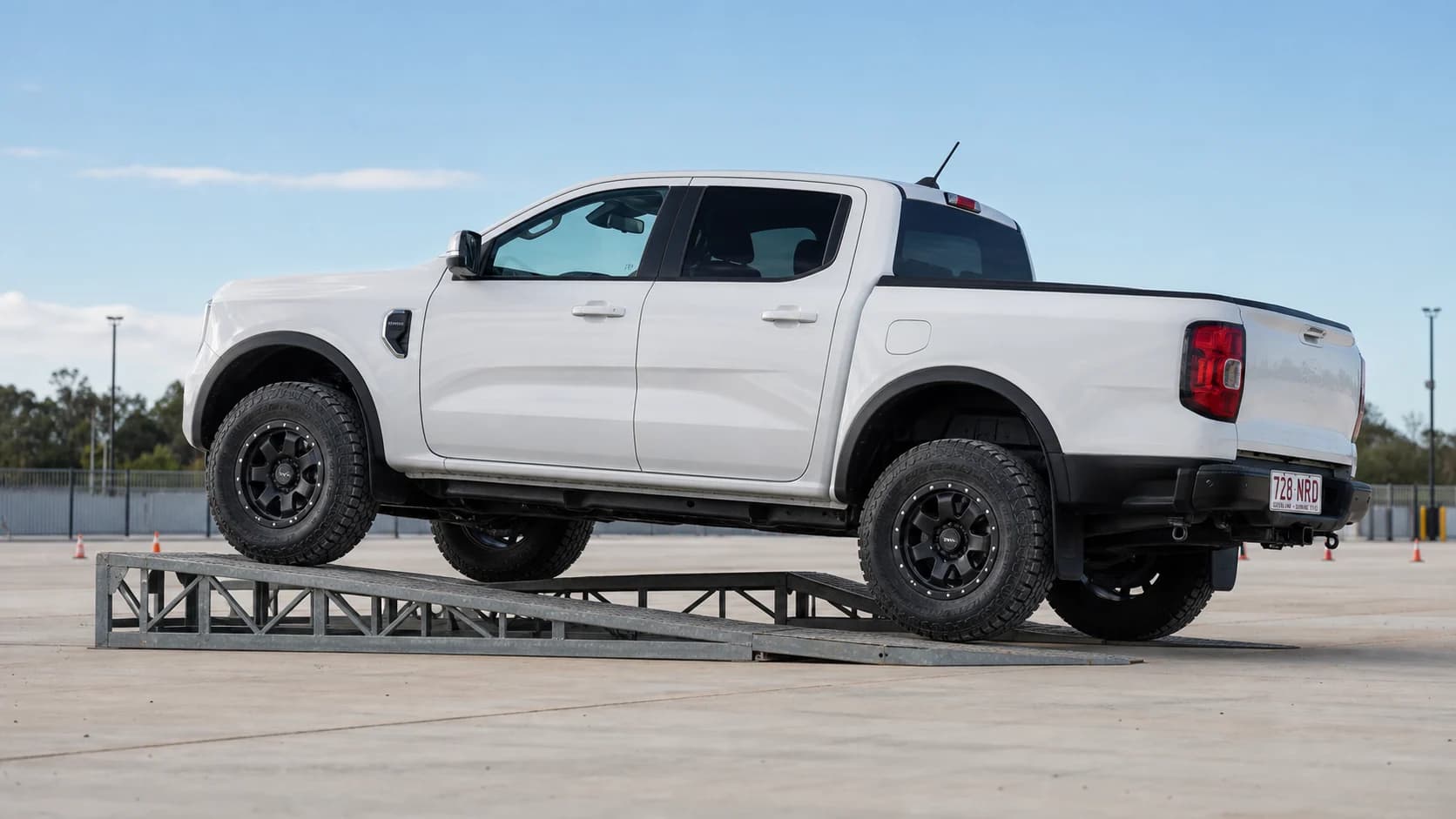
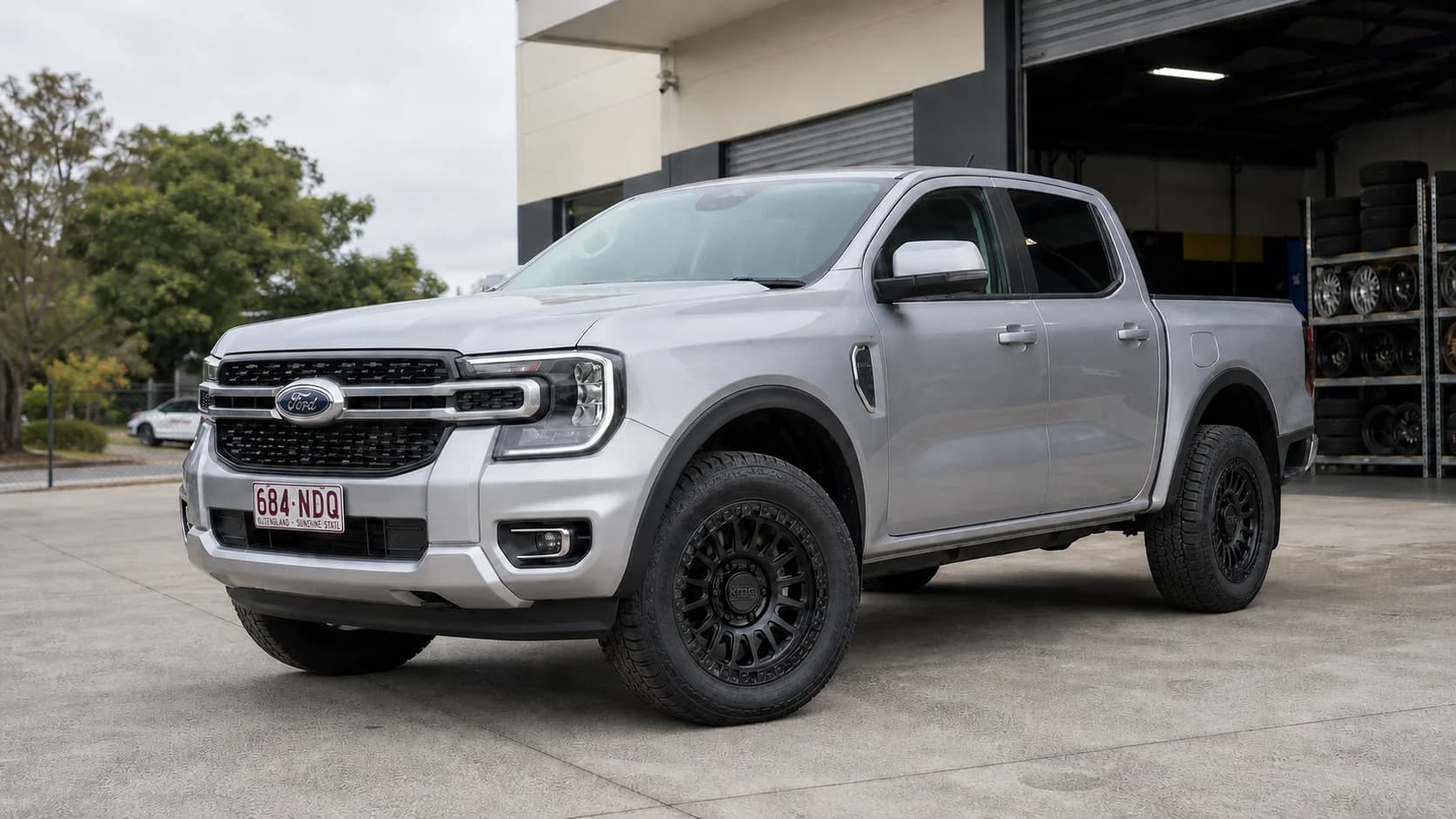
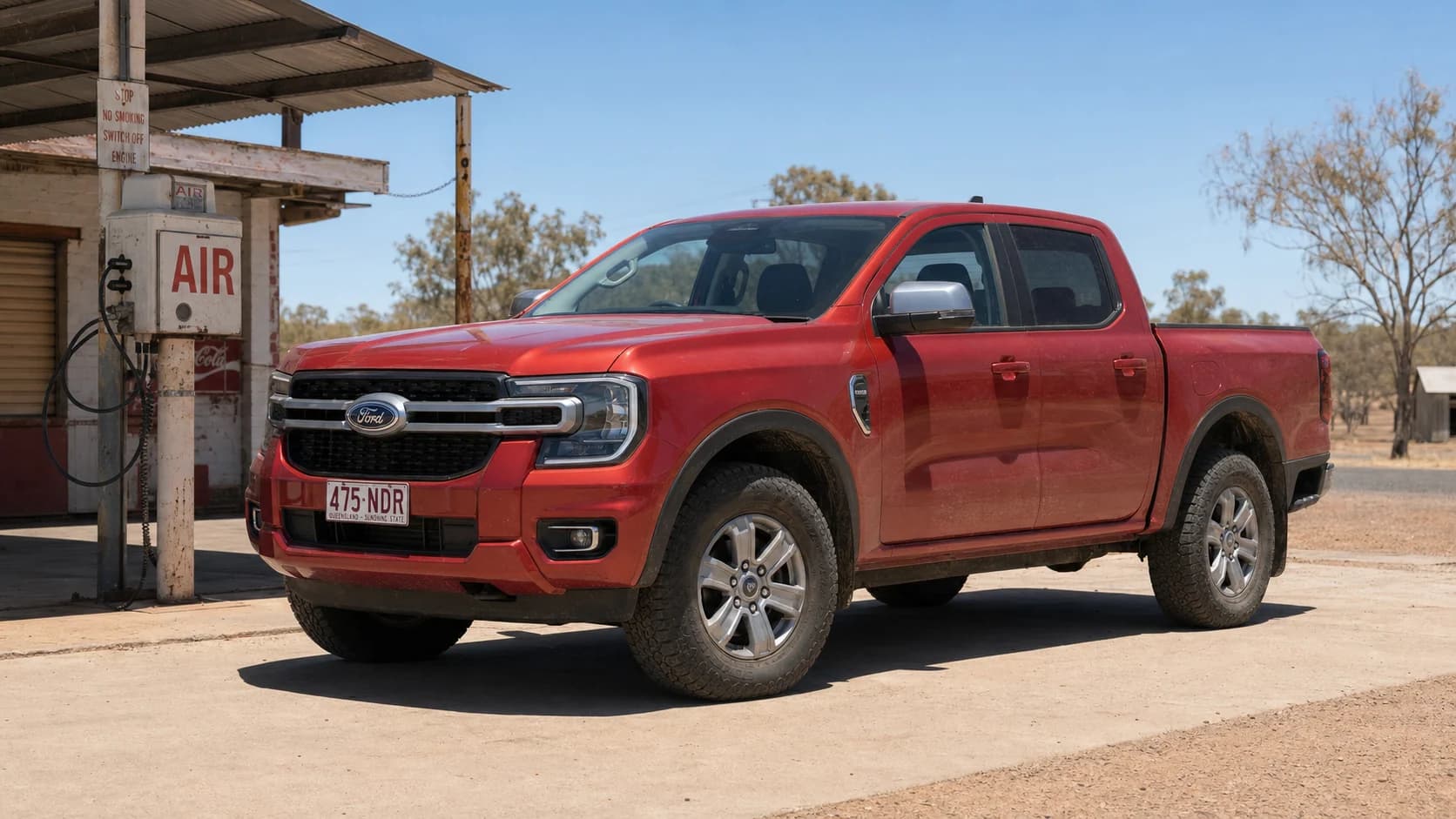
Yes, a standard 2022 and newer Next-Gen Ford Ranger can run a 33-inch-class tyre in specific wheel and vehicle combinations. The important qualification is that there is no responsible universal promise that every 33 will fit every Ranger without a lift or rubbing.
The exact tyre, wheel width and offset, variant, alignment, suspension and full-travel clearance determine whether a combination works. Treat 33s as a complete wheel, tyre, clearance and legal decision rather than a tyre-only swap.
What this guide covers
This guide covers the Australian-market P703 Next-Gen Ranger from 2022 onward, including standard XL, XLS, XLT, Sport, Wildtrak, Platinum, Black Edition, Wolftrak and Tremor variants where offered.
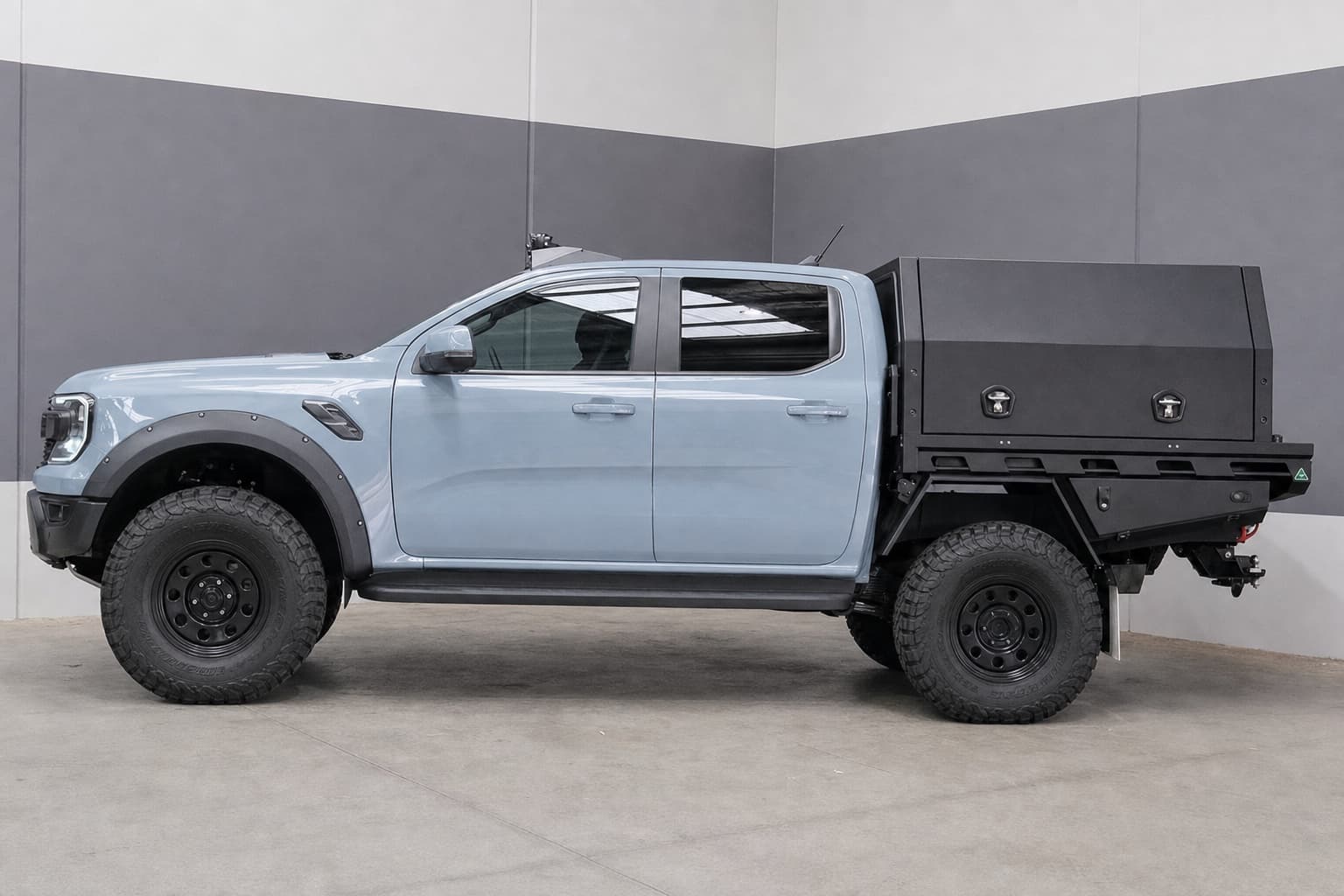
It does not cover Ranger Raptor, Ranger Super Duty, Ranger Hybrid or the pre-2022 PX Ranger. Those vehicles have different wheel, hub, suspension or powertrain packages. Advice should not move between them without checking the exact vehicle.
Start with the tyre placard on your Ranger and its VIN-specific Ford specification. The placard is the baseline for the original tyre size, load index, speed rating and pressure. Model year, variant and optional wheel packages can change that baseline.
The short answer
- Standard Next-Gen Ranger: 33-inch-class tyres can work in a correctly selected setup, but wheel position and full-travel clearance need checking.
- Ranger Raptor: Ford already pairs LT285/70R17 tyres with Raptor-specific wheels, FOX suspension and a different chassis package.
- Ranger Super Duty: Ford fits factory 33-inch tyres with eight-stud hubs as part of a separate heavy-duty package.
Raptor and Super Duty prove that Ford builds Rangers around 33-inch-class tyres. They do not prove that the same tyre or wheel fits a standard Ranger. Copying a sidewall number leaves out the hardware that positions and controls it.
What '33-inch tyre' means
'33-inch' is a category name, not an exact diameter shared by every product.
For example, Falken publishes its LT285/70R17 Wildpeak A/T4W at 838 mm overall diameter with an approved rim range of 7.5 to 9.0 inches. Maxxis publishes its LT285/70R17 AT811 RAZR at 836 mm with an approved rim range of 7.5 to 9.5 inches.
That 2 mm diameter difference is small, but the two tyres can also differ in shoulder shape, casing and real width. Near a liner, upper control arm or body mount, the whole shape matters. Wheel width and offset then move that shape inboard or outboard as the steering and suspension travel.
Compare the exact tyre data sheet and wheel specification. Do not buy from the '33' label alone.
Can 285/70R17 fit without a lift?
One 4x4 Australia build fitted LT285/70R17 Maxxis RAZR tyres to a Next-Gen Ranger on Fuel Ripper wheels. The reported tyre measured 837 mm and the Ranger kept its standard suspension. The article reported no fouling at full steering lock.
That is useful evidence that one no-lift combination was made to work. It is not universal fitment proof. The report does not document full compression, full droop or clearance at loaded touring weight. It also does not mean a different 285/70R17 on a different width or offset will follow the same path.
A fitter should inspect the proposed combination at:
- Full steering lock in both directions.
- Full suspension compression and droop.
- Normal ride height and the intended loaded touring weight.
- The inner sidewall, upper control arm, liner, mud flap and body mounts.
- The spare location and access to the spare-winch mechanism.
A lock-to-lock check on level ground is useful, but it is not a full articulation test.
Wheel width and offset decide where the tyre travels
Tyre diameter gets most of the attention. Wheel position often decides whether the result rubs.
A more positive offset pulls the wheel inboard, which can reduce outer poke but move the tyre closer to suspension components. A less positive offset pushes it outward, which can create more inner clearance while increasing guard exposure and the arc swept by the outer shoulder.
Wheel width also changes the supported tyre shape. Use a width inside the tyre maker's approved range, then confirm brake clearance, load rating, stud pattern and hub compatibility for the exact Ranger.
Do not select offset from a photograph. Two Rangers can look similar while using different wheel positions, tyre constructions and guard clearance.
Do you need a lift?
A lift can create more static space above the tyre and change the vehicle's stance. It does not automatically solve every interference point.
The tyre still moves through the steering arc. At compression it can approach the liner, body mount and guard. Depending on suspension design and wheel position, it can also move closer to other components through travel. A level or lift should therefore be assessed as part of the full combination, not used as a shortcut for clearance.
If a fitter recommends suspension changes, ask for the final measured height, alignment targets, loaded clearance and any effect on braking or driver-assistance calibration. The answer should describe the complete vehicle, not only the advertised lift height.
Load, pressure and the spare still matter
Match or exceed the load and speed requirements for your exact vehicle. A tyre's construction, load range and service description matter as much as its dimensions.
Ford advises that all four tyres on a four-wheel-drive vehicle should be the same size, type, brand and model. Plan the spare at the same time. A larger spare is of little use if it does not fit under the vehicle or cannot be lowered when touring gear is loaded.
The pressure on the door label applies to the original tyre specification. A non-standard tyre, wheel and load combination may need different guidance. Ask the tyre maker or qualified fitter for cold pressures based on the actual axle loads and use.
Are 33-inch tyres legal on a Ranger in Australia?
There is no single Australia-wide yes or no answer. Vehicle Standards Bulletin 14 sets national technical requirements, while each state and territory registration authority administers modifications.
Queensland provides one useful example. Its minor-modification guidance allows eligible MC, NA and NB1 vehicles an overall tyre diameter up to 50 mm larger than the largest optional tyre in the manufacturer's specifications, subject to the vehicle classification and every other stated condition. The guidance also covers combined lift and speedometer accuracy.
That does not mean every Queensland Ranger can automatically run any 33. The starting diameter must come from the applicable manufacturer specification, the vehicle classification must be correct and the completed vehicle must satisfy the rest of the rules. Other jurisdictions may apply different requirements.
Before buying, confirm:
- The largest manufacturer tyre option that applies to your exact Ranger.
- Your registration jurisdiction's current diameter, track and lift rules.
- Whether the change needs certification, inspection or insurer approval.
- Speedometer accuracy after the final tyre is fitted.
See 33-inch tyres in the Ranger visualizer
Fitment comes first, but proportion still matters. A 33-inch tyre can make a standard Ranger look balanced on one wheel and overly heavy on another.
Use the Ford Ranger visualizer to compare the look on your own vehicle. You can also explore the tyre visualizer and lift kit visualizer before opening the Studio with a clear side or three-quarter photo.
The image is a design preview. It cannot prove wheel clearance, suspension travel or legal compliance. Take the look you prefer to a qualified fitter with the exact tyre and wheel specifications.
Verdict
A standard Next-Gen Ranger can run a 33-inch-class tyre, and LT285/70R17 is one documented route. The safe answer is still combination-specific.
Choose the exact tyre first, keep the wheel inside its approved rim range, verify offset and load capacity then test full steering and suspension travel at realistic load. Check the placard, spare, pressure, speedometer and current rules in your state before treating the fitment as finished.
Sources
- Ford Australia, 2026.50MY Ranger brochure, accessed 26 July 2026
- Ford Australia, Ranger Raptor, accessed 26 July 2026
- Ford Australia, Ranger Super Duty, accessed 26 July 2026
- Ford Australia, tyre and wheel guidelines, accessed 26 July 2026
- Ford Australia, tyre pressure guidance, accessed 26 July 2026
- Falken Tyres Australia, Wildpeak A/T4W, accessed 26 July 2026
- Maxxis Tyres Australia, AT811 RAZR, accessed 26 July 2026
- 4x4 Australia, Ranger build with Fuel Ripper wheels and Maxxis RAZR tyres, accessed 26 July 2026
- Queensland Department of Transport and Main Roads, minor modifications, accessed 26 July 2026
- Australian Government, Vehicle Standards Bulletin 14, accessed 26 July 2026
- Australian Government, VSB 14 Section LS, accessed 26 July 2026