Tyres
Are 33-inch tyres legal in Victoria?
Check Victoria’s tyre and lift rules, the conditional 75 mm allowance, wheel track, ESC evidence and VASS requirements, including Melbourne.
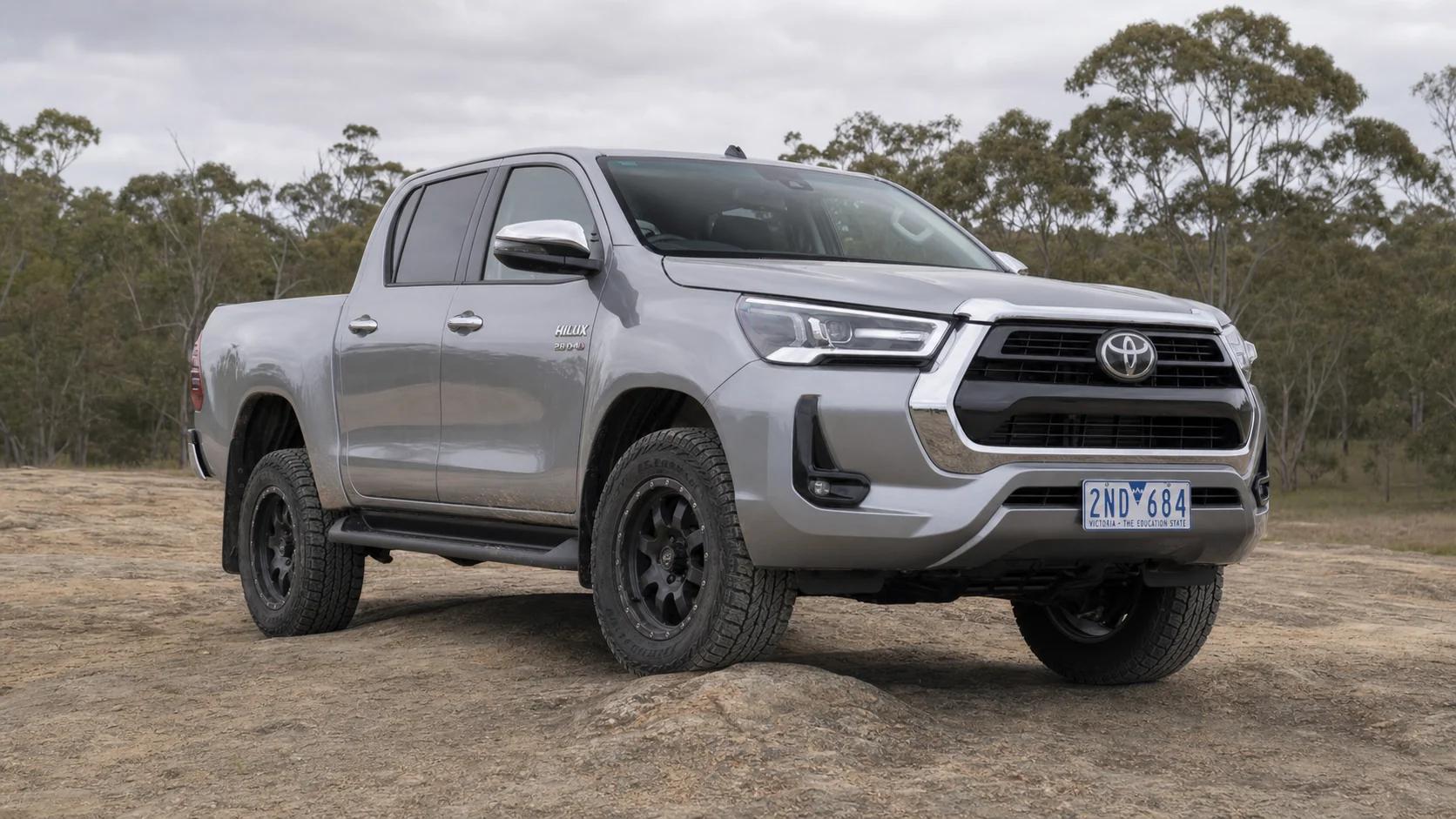
33-inch tyres can be legal in Victoria, including Melbourne, when the exact vehicle and complete package meet the applicable requirements. VSI 8 allows tyres up to 50 mm larger in diameter on eligible off-road 4WDs and provides a conditional combined-lift allowance up to 75 mm. It does not approve every set of 33s with a two-inch lift.
This guide covers motor vehicles up to 4.5 tonnes GVM. The alternative off-road 4WD lift provisions apply to ADR categories NA, NB1, MC or MD, not every vehicle described commercially as an SUV or 4WD. The official guidance and linked PDF were checked on 13 November 2026. The currently linked VSI 8 is dated October 2021.
What is the biggest legal tyre size in Victoria?
Under the off-road 4WD provisions in Transport Victoria's VSI 8, tyres may be up to 50 mm larger in diameter than specified by the vehicle manufacturer, subject to the stated conditions. They must stay within the mudguards in the straight-ahead position and avoid contact with bodywork, braking, steering or suspension through their movement.
There is no single inch size that is legal on every Ranger, HiLux, Patrol or LandCruiser. Establish the manufacturer-designated tyre applicable to your vehicle, then compare the proposed tyre using the relevant specifications. A ‘33-inch’ or ‘35-inch’ label does not establish the exact difference.
VSB 14 Section LS also sets tyre and rim conditions, including load, speed, rim suitability, wheel track and speedometer accuracy. Its passenger-car rules differ from its eligible off-road and goods-vehicle provisions. A diameter calculation alone is not a complete compliance assessment.
Is a two-inch lift and 33-inch tyre legal in Victoria?
It can qualify, but only within the conditions. VSI 8 offers an alternative to the VSB 14 suspension-lift provisions for the eligible off-road categories. A combination of up to 50 mm suspension lift and 25 mm more tyre radius can produce up to 75 mm total lift without the testing and certification normally required above 50 mm.
The suspension kit must meet the documented requirements, including:
- Commercial supply by a corporation and manufacture for the vehicle application.
- Design and testing for the exact make, model and variant at the combined suspension and tyre-radius increase.
- No adverse effect on rollover propensity, handling, braking or structural integrity at that combination.
- Installation in accordance with the kit manufacturer's instructions.
- A written statement of suitability from the kit manufacturer, retained by the owner, with or without the tyre-diameter increase.
- Adequate bump and droop travel, tyre coverage and clearance through steering and suspension movement.
Electronic stability control must also continue to operate correctly. A product advertised as a ‘two-inch kit’ is not itself proof of these requirements. Two inches is 50.8 mm; confirm the actual installed lift and the documentation for the complete package.

What counts towards the total lift?
Tyres contribute their increase in radius, which is half the increase in diameter. A tyre 40 mm taller than the reference contributes 20 mm to nominal ride-height increase. Combined with 50 mm suspension lift, the arithmetic total is 70 mm.
Victoria: how diameter and suspension combine
Tyre diameter grows by 30 mm
- Nominal tyre contribution
- 15 mm
- Suspension contribution
- 50 mm
- Arithmetic total
- 65 mm
Tyre diameter grows by 40 mm
- Nominal tyre contribution
- 20 mm
- Suspension contribution
- 50 mm
- Arithmetic total
- 70 mm
Tyre diameter grows by 50 mm
- Nominal tyre contribution
- 25 mm
- Suspension contribution
- 50 mm
- Arithmetic total
- 75 mm
These examples explain the dimensions. They do not approve a tyre, confirm an installed lift or replace the kit and vehicle checks. The tyre must still satisfy its own diameter limit and the combination must qualify for the VSI 8 alternative.
Body blocks are not part of this suspension-and-tyre 75 mm alternative. Do not add a body lift to the example and assume the same exemption covers it. Establish the applicable VSB 14 and VASS requirements before starting that work.
Are 35-inch tyres legal with a VASS certificate?
A VASS certificate is not an unlimited tyre-size exemption. Begin with the actual proposed tyre diameter and the applicable manufacturer baseline. If the combination falls outside the approved modifications in VSI 8 and VSB 14, consult a VASS signatory before buying or modifying the vehicle. The signatory must establish an available approval route and the necessary evidence; do not assume approval is possible.
The same caution applies to cutting mounts, changing steering or suspension components, altering axles or copying a complete converted vehicle. A photograph of a legally registered build does not establish that your different package can receive the same approval.
Where a vehicle already has a documented conversion, assess changes against that vehicle's approval conditions rather than a standard-vehicle internet size chart.
What wheel offset and track increase are legal?
VSB 14 Section LS clause 4.2.11 limits eligible off-road 4WD and goods vehicle wheel track to 50 mm beyond the manufacturer's maximum for the particular model. Passenger cars have a separate 25 mm provision, and the off-road clause does not apply to MA-category vehicles merely because they have four-wheel drive.
This is a track limit across the axle, not a 50 mm offset allowance on each side. With unchanged hubs, reducing offset by 20 mm on each same-width wheel increases track by 40 mm. You still need the original and maximum manufacturer track to assess the actual package.
A wider rim at unchanged offset moves its inner and outer edges but does not change the wheel centreline. That can create a clearance or coverage problem even where track is unchanged. Flares do not increase the track allowance. Track reduction and replacement-axle cases need their own assessment.
For alloy wheels, VSI 8 requires suitable load rating, compliant rim width and recognised durable standard markings. The published wheel load rating alone does not establish that the exact tyre, brake package and vehicle application are suitable.
What evidence is needed for electronic stability control?
VSI 8 says evidence should come from the vehicle manufacturer, kit manufacturer or testing to establish the effect of changes to tyres, rims, suspension and steering. ESC must not be adversely affected within the approved provisions. Changes outside those provisions require VASS approval and appropriate evidence or testing of the system's continued operation.
Do not disconnect ESC or assume that the absence of a dashboard warning proves the modified system performs correctly. Retain the kit manufacturer's statement and any vehicle-specific evidence with the installation records.
Are the tyre laws different in Melbourne?
Melbourne uses the Victorian vehicle-modification framework. It does not have a separate larger-tyre allowance for a Melbourne-registered vehicle. Use the same VSI 8, VSB 14 and VASS requirements as elsewhere in Victoria.
Queensland has different published details, including its specific diameter-method instruction, so use the Queensland guide for a vehicle registered there.
What should I check for my vehicle?
Start with the exact generation, grade, build date, ADR category, manufacturer tyre designation and any existing modification approval. Then compare the proposed tyre's dimensions, load/speed specification and approved rim width with the wheel application. Check full-travel clearance, coverage, spare fitment and speedometer accuracy before treating the package as complete.
Use the HiLux N80 biggest tyre guide, Next-Gen Ranger guide, Prado 250 guide or Y62 Patrol guide for the relevant comparison. More generations are in the guide library.
Once you have a technically suitable shortlist, see the wheel and tyre look on your vehicle. Nordak creates a visual concept; the installer and applicable approval process establish mechanical and legal suitability.