Tyres
Can you fit 33-inch tyres on a Toyota HiLux N80?
A clear answer on 33-inch tyres for the 2015 to 2025 Toyota HiLux N80, including exact size, wheel, clearance, lift and Australian legal checks.
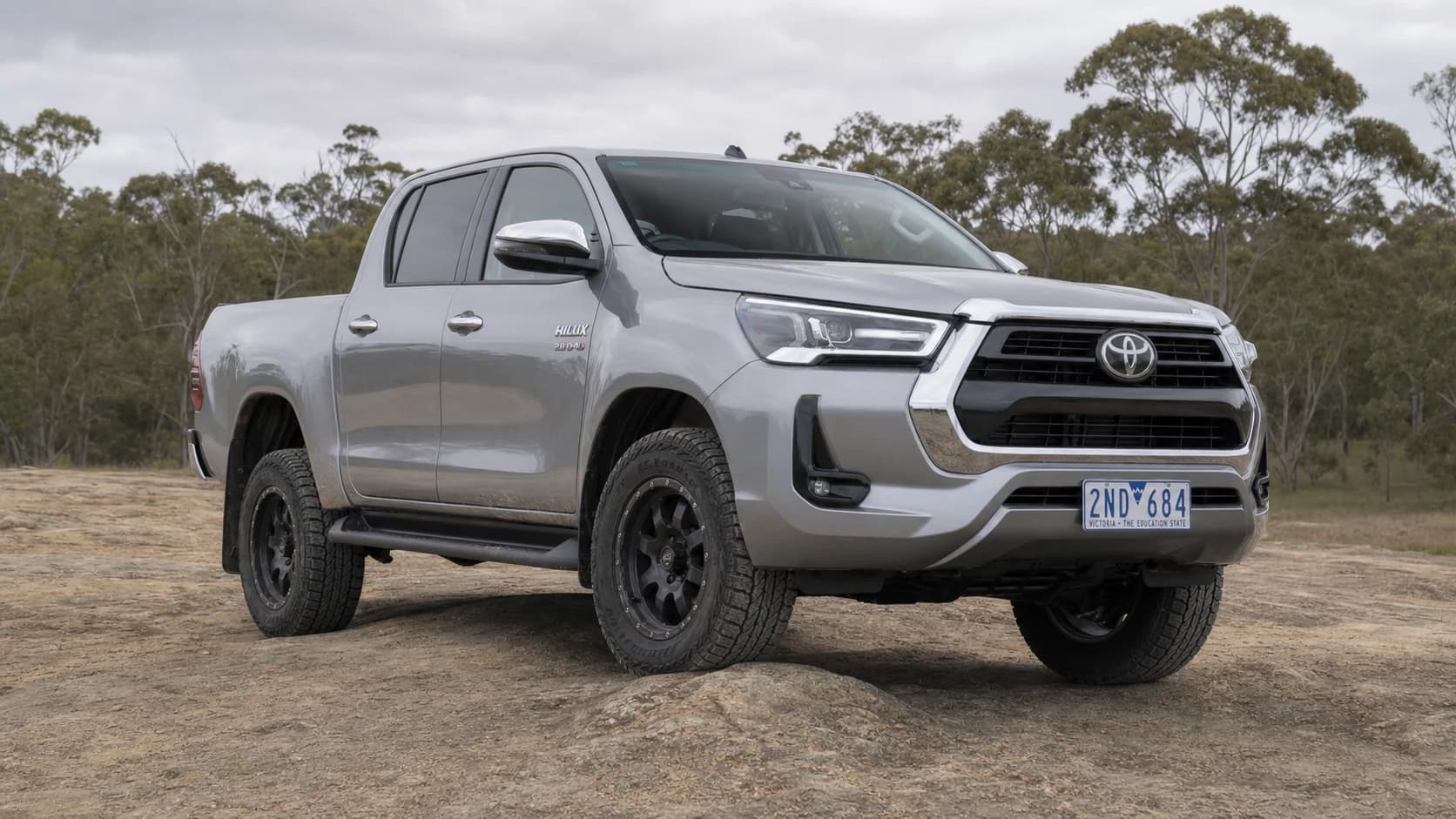
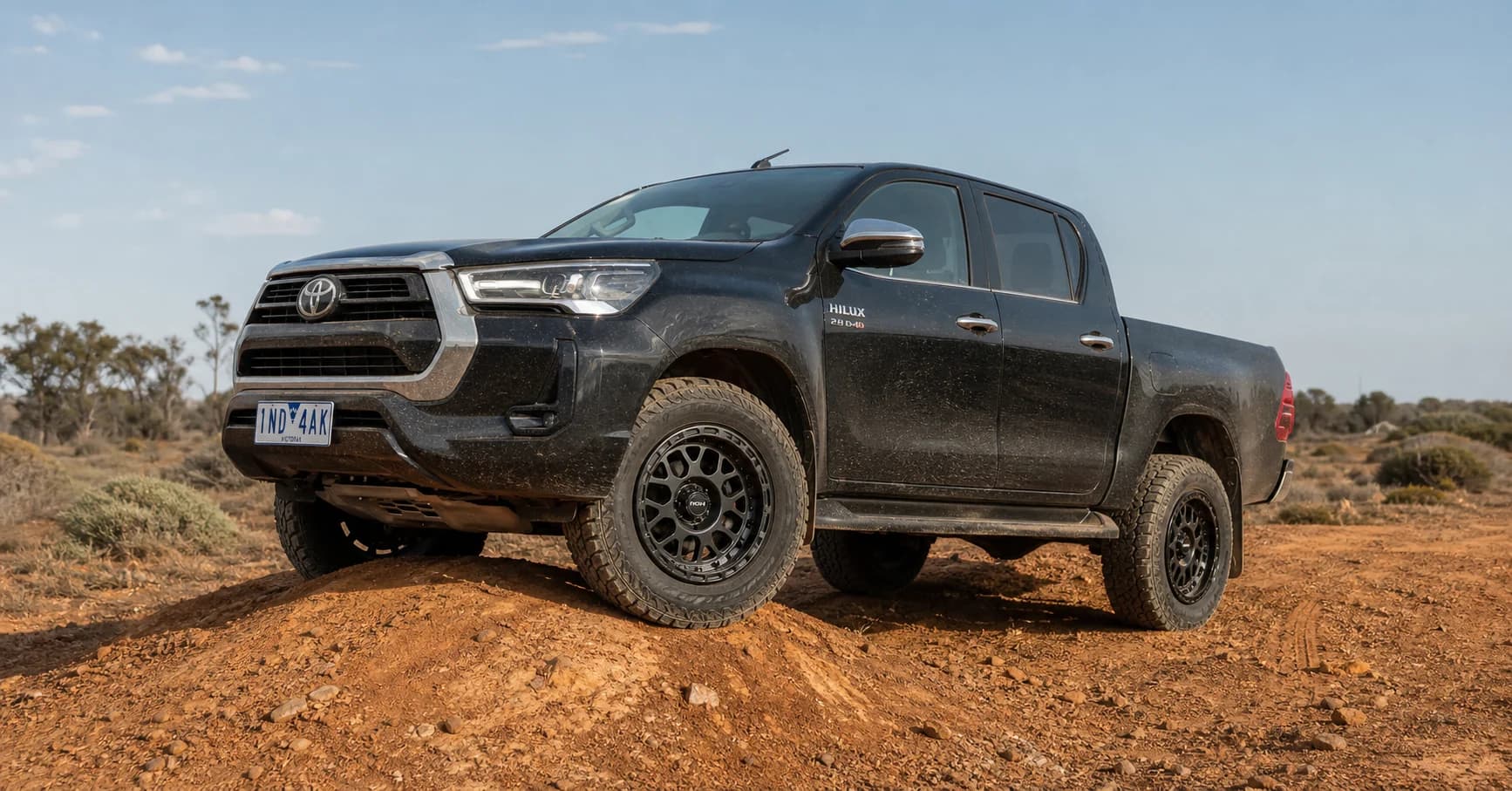
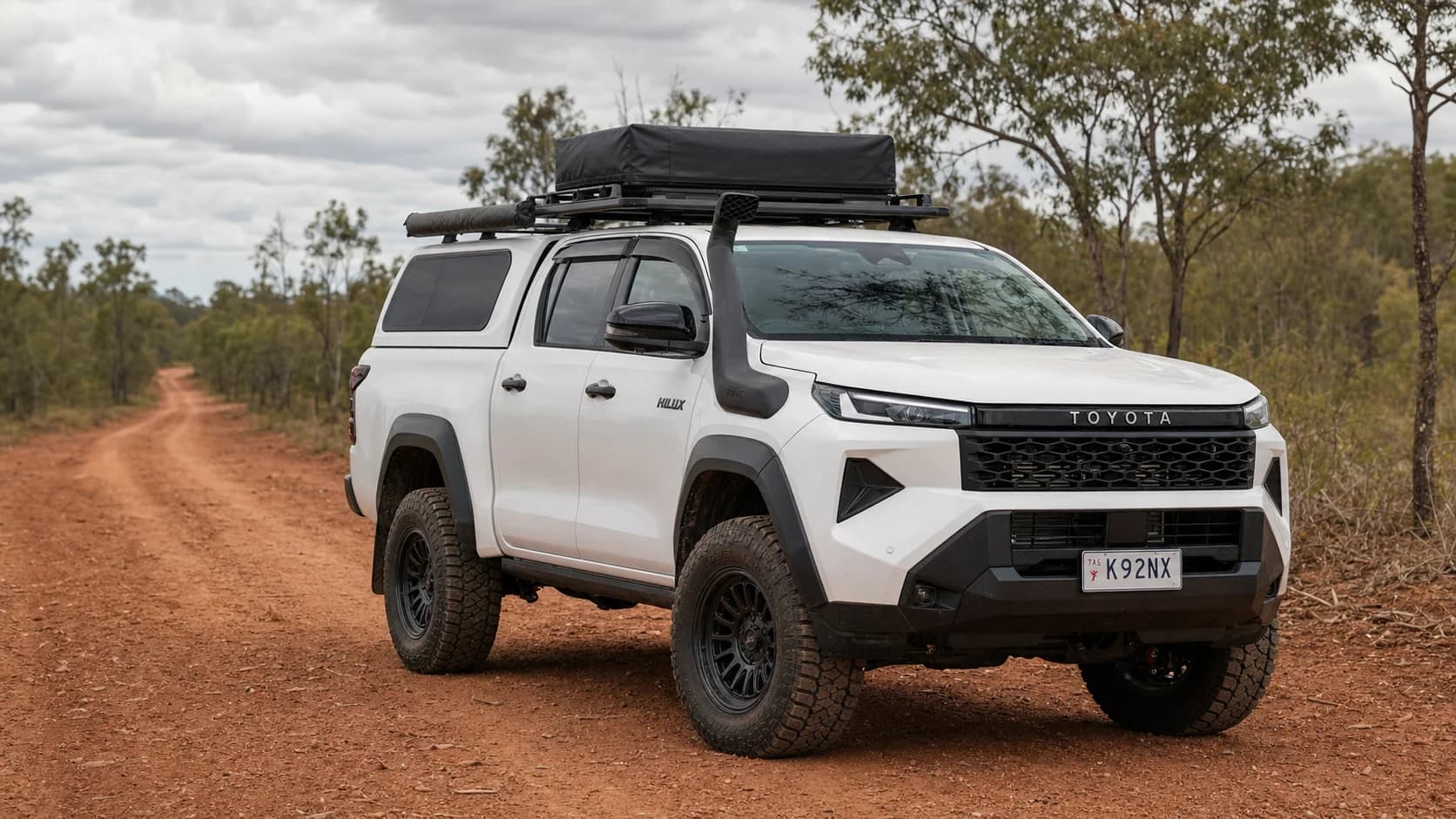
Yes, a 33-inch-class tyre can be part of a properly modified Toyota HiLux N80 build. It is not a universal bolt-on fitment.
The common LT285/70R17 size is where many owners start, but the final answer depends on the exact tyre, wheel width, offset, HiLux variant, loaded clearance and registration rules. Some 285/70R17 tyres also sit beyond the common 50 mm technical diameter envelope when compared with factory 265/65R17 options.
Choose the tyre first. Then have the complete wheel, suspension and vehicle combination checked before buying.
What this guide covers
This guide covers Australian-market standard-track eighth-generation HiLux models sold from 2015 until the replacement model arrived in December 2025. The generation is commonly called N80 or AN120/AN130.
It focuses on Hi-Rider and 4x4 WorkMate, SR, SR5 and Rugged X applications. It does not cover low-rider 4x2 WorkMate, wide-track Rogue, wide-track GR Sport or the replacement HiLux.
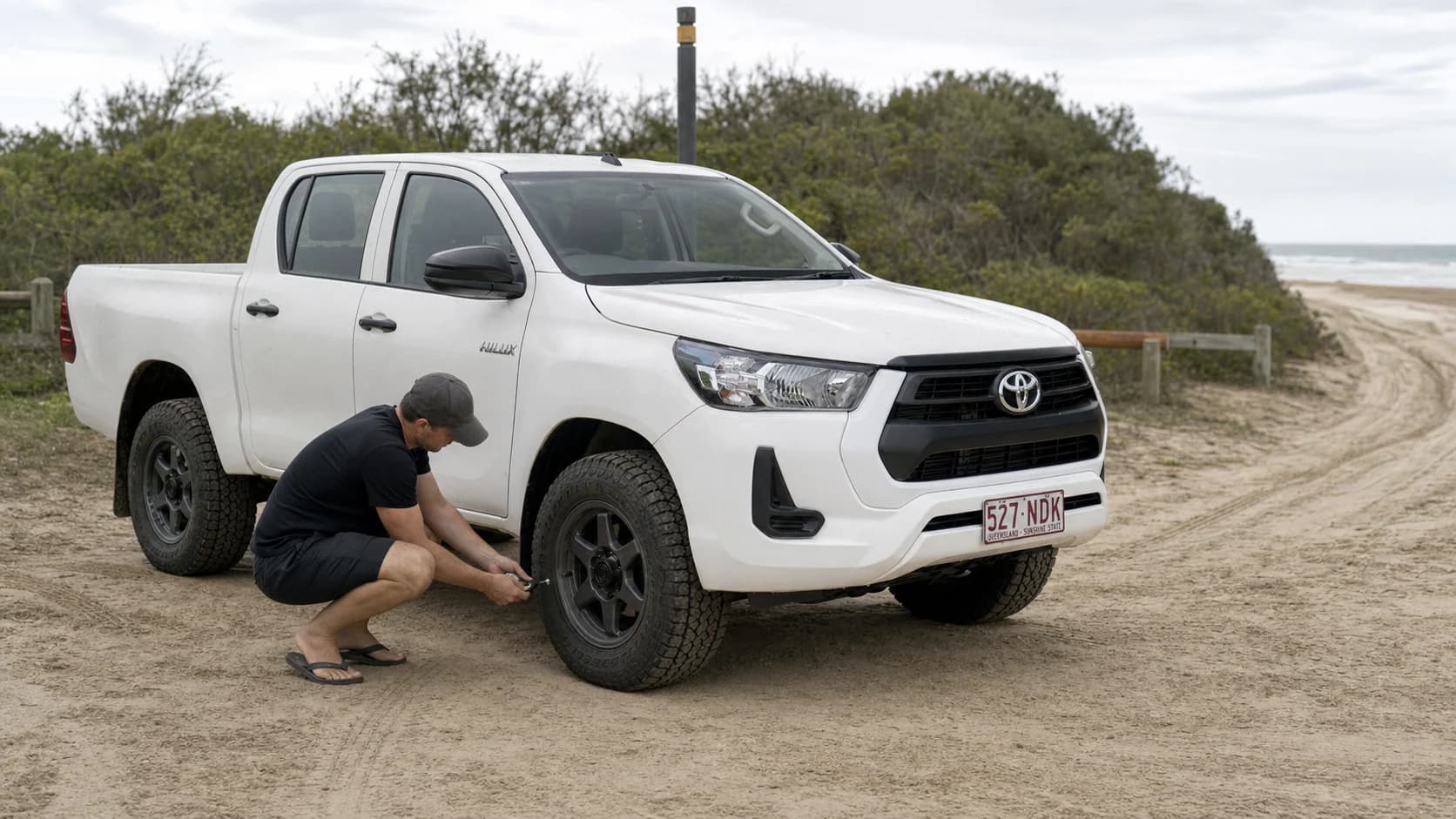
Toyota changed factory tyres across the N80 range. Its 2020 specifications include 225/70R17C, 265/65R17 and 265/60R18 on different grades. Start with the tyre placard and build details on your exact vehicle.
The short answer
Treat 33s as a complete modified-vehicle decision, not a tyre swap.
An LT285/70R17 all-terrain is one common 33-inch-class option. Maxxis publishes its RAZR AT811 in that size at 836 mm overall diameter. Falken publishes the Wildpeak A/T4W at 838 mm. Even though the sidewalls carry the same nominal size, their dimensions and approved wheel ranges differ.
That width and diameter can affect:
- clearance at full steering lock
- clearance through suspension compression and droop
- wheel offset and tyre coverage
- speedometer accuracy
- spare-wheel practicality
- load, braking and steering behaviour
- certification and insurance requirements
A lift can add static space above the tyre. It does not prove that the tyre clears the body mount, guards, chassis, steering and suspension through every operating condition.
What does ‘33-inch’ actually mean?
The label is convenient, but it is not precise enough to buy from.
Maxxis lists its LT285/70R17 RAZR AT811 at 836 mm overall diameter with an approved rim range from 7.5 to 9.5 inches. Falken lists its LT285/70R17 Wildpeak A/T4W at 838 mm with a 7.5 to 9.0-inch rim range.
The same point applies at factory size. The cited 265/65R17 products range from 776 to 782 mm depending on brand and construction.
Within those two product families, moving from 265/65R17 to LT285/70R17 adds roughly 54 to 61 mm in overall diameter. That is enough variation to change the legal and physical fitment conversation.
Do not order a ‘33-inch package’ without the exact tyre SKU, published diameter, approved rim width and load specification.
Will 285/70R17 fit without a lift?
There is no responsible universal answer.
The N80 covers different bodies, grades, brakes, factory wheels and model years. Toyota also gave the wide-track GR Sport its own suspension, wheel, tyre and brake package, which is why it cannot be used as proof for the standard-track HiLux.
Wheel offset changes where the tyre sits. Moving it outward can create space on the inside while introducing guard coverage or outer-arch problems. Moving it inward can do the opposite. Static driveway clearance is not the same as loaded clearance at full lock and suspension travel.
A suspension lift may be part of a well-resolved 33-inch build, but ‘fit a two-inch lift’ is still too vague. The fitter needs to assess the exact tyre and wheel together, then check:
- Full steering lock in both directions.
- Suspension compression and droop at realistic vehicle load.
- Clearance to the body, chassis, brakes, steering and suspension.
- Tyre coverage in the straight-ahead position.
- Wheel and tyre load ratings.
- Speedometer accuracy.
Do not accept rubbing as the normal cost of the look. The national technical guidance requires the wheel and tyre to avoid contact under operating conditions.
Are 33-inch tyres legal on a HiLux in Australia?
There is no single national yes or no answer.
VSB 14 Section LS sets a technical envelope for non-standard tyres and rims. For applicable 4WD goods vehicles and equivalent 2WD models, it limits tyre diameter to no more than 50 mm above a manufacturer-designated tyre. Clearance, rim compatibility, coverage and speedometer requirements still apply.
The Australian Government also states that VSB 14 does not replace state and territory administrative requirements.
Queensland provides one practical example. Its minor-modification guidance allows eligible 4WD-type vehicles up to 25 mm of tyre lift, equal to a 50 mm diameter increase, subject to the stated conditions.
The published 285/70R17 examples in this guide are 54 to 61 mm larger than the cited 265/65R17 alternatives. That comparison does not decide the legality of your HiLux, but it shows why assuming that 285/70R17 is automatically an uncertified fitment is risky.
Before ordering, confirm:
- the manufacturer-designated starting tyre for your exact HiLux
- the current rules in the state or territory where it is registered
- whether the complete lift needs certification or inspection
- the speedometer, insurer and spare-wheel requirements
Is there an easier alternative?
If your priority is useful clearance and sidewall rather than the 33-inch label, compare LT275/70R17.
Maxxis publishes its AT811 in that size at 821 mm overall diameter. Falken publishes its A/T4W at 824 mm. Both are materially smaller than the 836 to 838 mm LT285/70R17 products.
That does not make 275/70R17 an automatic fit. It can, however, reduce the diameter, width and clearance challenge while preserving a substantial 17-inch all-terrain setup.
The right decision depends on what you are building:
- Choose LT285/70R17 only when the full 33-inch-class build has been checked and approved.
- Compare LT275/70R17 when simpler clearance and approval matter more than the headline size.
- Stay near the placarded size when road use, low complexity and predictable spare-wheel packaging matter most.
Choose the wheel and tyre as one system
A 17-inch wheel is the logical starting point for the two tyre sizes discussed here, but diameter alone does not establish fitment.
The cited LT285/70R17 products accept different rim-width ranges. The exact wheel must also have the right load rating, hub attachment, brake clearance and offset for the specific HiLux.
Use our N80 HiLux wheel guide to shortlist the look, then take the exact wheel part number and tyre SKU to a qualified supplier. Our N80 all-terrain tyre guide explains the construction and use-case trade-offs across the current catalogue.
See 33-inch tyres on your HiLux
Fitment comes first, but proportion still matters. A 33-inch tyre can look balanced on one wheel design and unnecessarily heavy on another.
Use the Toyota HiLux visualizer to compare the look on your own vehicle. You can also explore the tyre visualizer and lift kit visualizer before opening the Studio.
The image is a design preview. It cannot prove clearance, mechanical suitability or legal compliance.
Verdict
You can build an N80 HiLux around a 33-inch-class tyre, but there is no defensible universal ‘yes’ for LT285/70R17.
Pick the exact tyre first. Match it to an approved wheel, verify loaded clearance at full steering and suspension travel then confirm the rules where the vehicle is registered. If that path adds more compromise than value, a 275/70R17 can deliver much of the visual and practical gain with less diameter and width.