
Tyres
All-terrain tires for the 2024-on Toyota Tacoma: options compared
A fourth-generation Tacoma all-terrain shortlist covering daily driving, trail use, P-metric versus LT construction and the separate decision to fit 33s or 35s.
Technical review by Nordak on 23 September 2026.
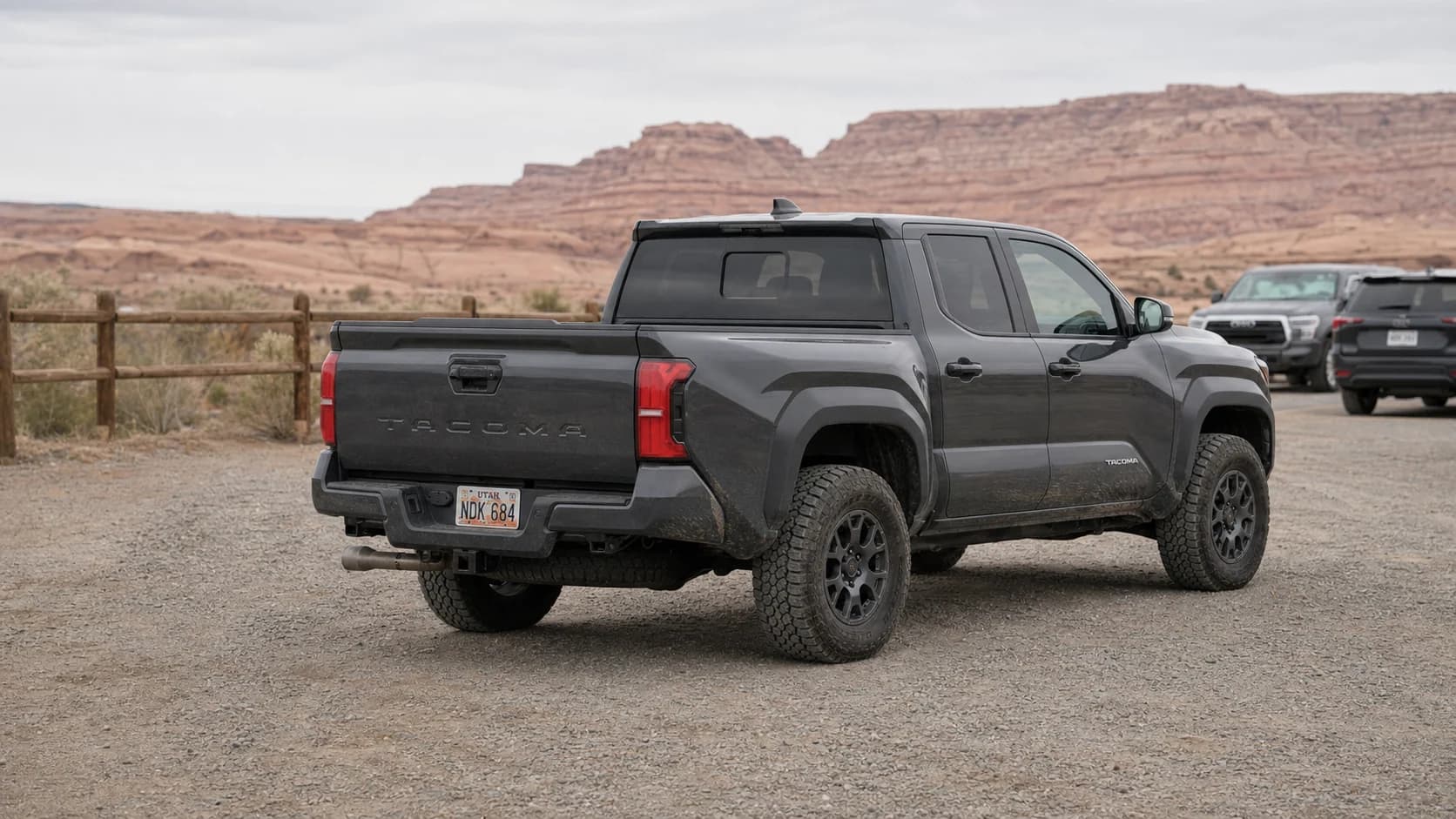
For a daily-driven fourth-generation Tacoma, choose an all-terrain in the appropriate size and construction before chasing a 35-inch look. Our starting shortlist is Falken Wildpeak A/T4W, Toyo Open Country A/T III, BFGoodrich KO3 and Maxxis RAZR AT.
We would investigate a suitable non-LT option for a lightly equipped road-and-trail truck, and compare LT alternatives when the load and intended use justify them. The exact vehicle requirements still decide what is eligible.
This guide covers US-market 2024 to 2026 Tacomas. It does not assume one tire size or suspension package across SR, SR5, TRD Sport, TRD Off-Road, Limited, TRD Pro and Trailhunter.
The four candidates
| Tire | Why we would investigate it | What needs checking |
|---|---|---|
| Falken Wildpeak A/T4W | A useful starting point for comparing construction options | Exact trim, SKU and approved wheel |
| Toyo Open Country A/T III | An alternative for a mixed road-and-trail shortlist | US specification, load and installed cost |
| BFGoodrich All-Terrain T/A KO3 | Another established all-terrain family to compare | Correct size rather than an assumed 33 or 35 |
| Maxxis RAZR AT | A fourth option for a like-for-like quotation | Local supply and exact product dimensions |
The order is not a test ranking. We have not evaluated these four on the same Tacoma. Manufacturer positioning and owner enthusiasm do not establish which stops shortest in the wet or lasts longest.
P-metric or LT?
Start with the tire placard and how the truck is used. Ask the supplier to explain why the proposed construction is appropriate for the load and terrain.
Falken documents a modified 2024 SR5 using a P285/70R17 A/T4W with a levelling kit, aftermarket wheels and flares. That example is useful because it shows that a 33-inch-class discussion does not automatically mean LT construction.
It remains one modified truck. It does not approve that tire on every factory wheel or establish that non-LT is right for your Tacoma.
For a lightly equipped commuter, we would ask why extra construction weight is needed before accepting it. For a truck carrying permanent trail equipment, we would ask for a load-based specification and pressure recommendation. Both conversations need the exact tire, not just the letters on the sidewall.
Stock size, 33s or 35s?
Choose the intended diameter separately from the tread brand.
Retaining an approved existing size is a sensible starting point when you want a different tread without a larger build project. For 33s, use the fourth-generation Tacoma fitment guide. For 35s, read the specific kit and trim restrictions.
A tire with the same diameter as an example build may have a different width or shoulder profile. Confirm the proposed wheel's width and offset alongside it.
How we would compare the quotes
Ask every supplier to quote the same approved size and intended construction. Include the spare, monitoring sensors, balancing and alignment where needed. If one option requires new wheels, show that cost separately.
Ask for relevant wet-road evidence if the truck spends much of its life commuting. If winter use matters, discuss the appropriate seasonal tire choice for your conditions rather than assume an all-terrain label answers it.
Compare the actual US warranty terms. Do not import an Australian product's specifications or coverage into a US buying decision.
Settle the practical choice, then the look
NHTSA's tire guidance explains the role of the vehicle placard and proper tire selection. Use that baseline, then have any modified setup assessed for your exact truck.
Once your candidates are technically appropriate, see the tread style and proportions on your Tacoma. A visual comparison can help you choose the look you want before the fitting appointment.